
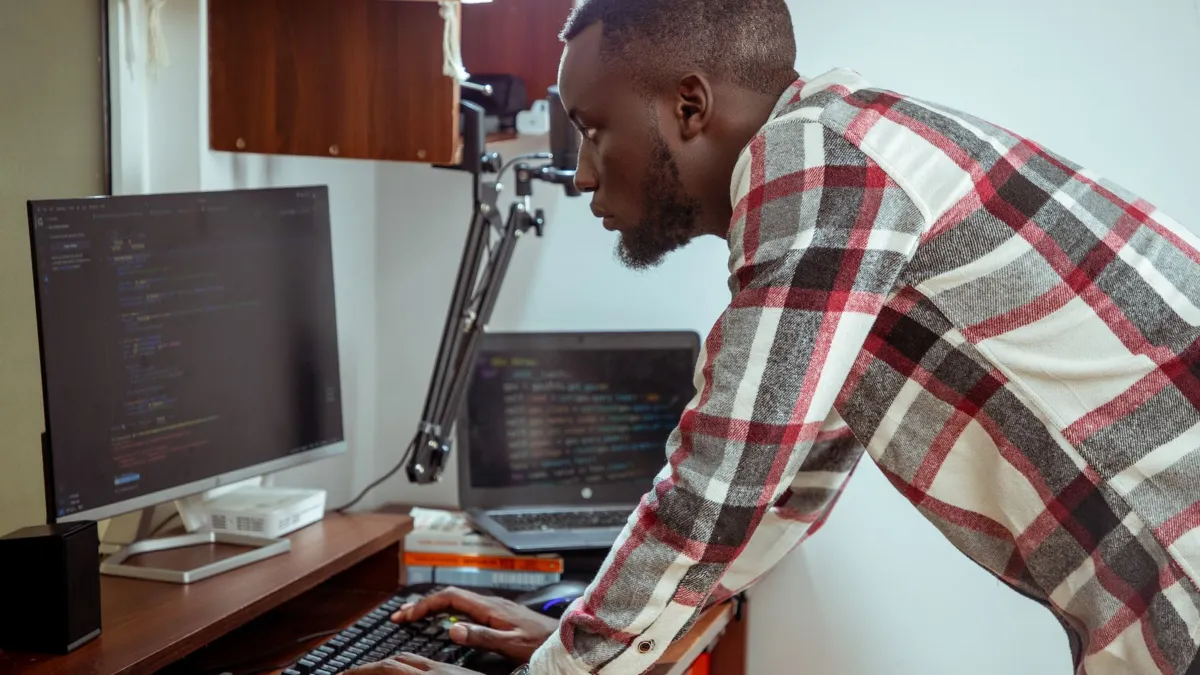
The short answer
- Custom web development builds software around your process: business systems, POS, portals, booking platforms.
- It makes sense when staff re-enter data, reconcile M-Pesa by hand or outgrow off-the-shelf tools.
- Kenyan systems usually need M-Pesa (Daraja), eTIMS invoicing, data-protection controls and user roles.
- Insist on a written specification, staged delivery, and ownership of your code and data.
Most businesses start with an off-the-shelf tool: a spreadsheet, an accounting package, a WordPress site with a few plugins. That works until the tool starts shaping the business instead of the other way round. Staff copy data between systems, M-Pesa payments are matched by hand, and reports take a day to compile.
Custom web development means building software around how your business actually works. This guide explains what that involves in Kenya, when it's worth it, what it typically includes, and how to run a project so it doesn't drag on or go over budget.
What custom web development means
A custom web application is software that runs in a browser (and often on phones) and is built for one organisation's processes. Unlike a brochure website, it has users, permissions, data and business rules. Typical examples we see in Kenya:
- Business management systems: quotes, invoices, suppliers, stock and expenses in one place.
- Point-of-sale (POS) and inventory for shops, bookshops and restaurants, with M-Pesa reconciliation.
- School and college portals: admissions, fees, results and parent communication.
- Clinic and hospital systems: patient records, appointments and billing.
- Booking and ordering platforms for hotels, car hire, cafés and events.
- Customer portals and CRMs that replace scattered spreadsheets and WhatsApp threads.
When does a business need custom development?
Off-the-shelf software is cheaper to start with and should be your first choice when it fits. Custom development starts to make sense when:
- staff re-enter the same information in two or three systems every day;
- you can't get the reports you need without exporting and fixing data by hand;
- M-Pesa, bank and system records have to be reconciled manually;
- a SaaS subscription charges per user in dollars and the bill keeps growing;
- your process is a competitive advantage that generic tools can't capture;
- you need to connect systems that don't talk to each other.
Features Kenyan businesses usually need
M-Pesa payments and reconciliation
Through Safaricom's Daraja API, a system can send an M-Pesa prompt to a customer's phone (M-Pesa Express / STK Push), receive confirmations from your Paybill or Till automatically, and mark invoices or orders as paid without anyone checking SMS messages. For a simpler setup on a website, see how to add M-Pesa Paybill to your website.
Tax and compliance
Since the Finance Act, 2023, all businesses must issue eTIMS invoices, so many systems now need to generate or send invoices to KRA's eTIMS. Customer and patient data also falls under the Data Protection Act, 2019, which affects how data is stored, who can see it and how long it's kept. Our guide to accepting online payments legally covers both.
Roles, approvals and audit trails
Who can approve a purchase, issue a refund or edit a price? Custom systems enforce these rules and log who did what, which matters for fraud prevention and audits.
Integrations
Systems often need to talk to accounting software, SMS gateways, email, courier services or other platforms. We explain the options in what API integration is and why it matters.
The technology behind it
We typically build business systems with Laravel (a PHP framework) on the server, React for fast, app-like screens, and MySQL for the database. This is a mature, widely used stack, which matters for you: it's easier to find developers to maintain it later, and it runs well on affordable Kenyan and international hosting. Larger systems run on cloud servers; smaller ones can run on good cPanel hosting.
How a custom development project runs
- DiscoveryWe map your current process, who does what, the documents involved and where time is lost.
- SpecificationA written scope: screens, user roles, rules, reports and integrations. This is what makes a fixed price possible.
- DesignWireframes of the main screens so your team can react before any code is written.
- Build in stagesWorking parts are delivered in sprints, so you test real screens early instead of waiting months.
- Data migration and trainingExisting records are imported and staff are trained on the new system.
- Launch and supportGo-live with monitoring, backups and a support period for fixes and small changes.
What custom development costs
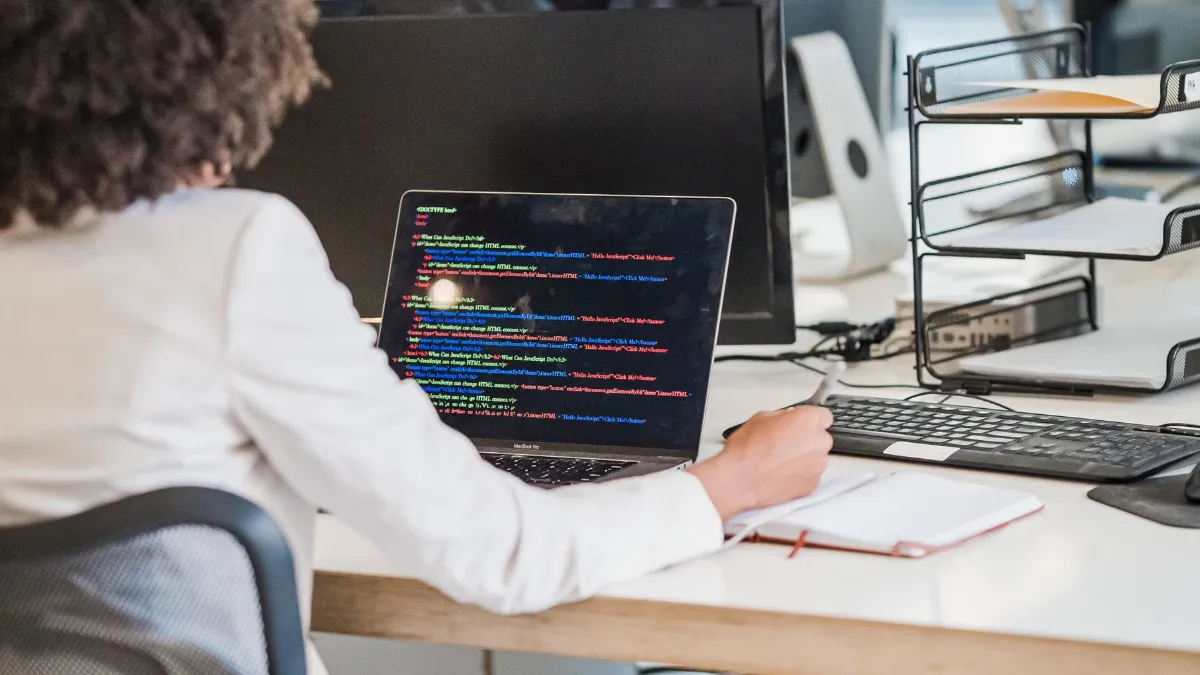
Custom systems are priced on scope, because the work depends on the number of user roles, screens, rules, reports and integrations. A focused tool that replaces one spreadsheet is a very different project from a multi-branch ERP. The most reliable way to get a realistic figure is a short discovery session and a written specification. For context on simpler projects, see how much a website costs in Kenya.
Plan for running costs too: hosting or cloud servers, SMS and payment fees, domain renewal, and a support or maintenance plan.
Choosing a developer: questions to ask
- Can you show systems you've built that are in use today?
- Will I own the source code and the data?
- Is the scope written down, and how are changes priced?
- How will you handle M-Pesa, eTIMS and data protection?
- Where will it be hosted, how is it backed up, and what happens if you're unavailable?
- What support do I get after launch?
Next steps
If you're losing hours to spreadsheets, manual reconciliation or tools that don't fit, write down the three processes that cause the most pain. That list is the start of a good brief. We design and build business systems, portals and integrations with Laravel, React and the M-Pesa Daraja API; see our web development service or send us your brief for a free consultation.
Frequently asked questions
What is the difference between a website and a web application?
A website mainly presents information. A web application lets users log in, enter and manage data, and follows business rules, for example a POS, a school portal or a booking system.
Can a custom system accept M-Pesa?
Yes. Using Safaricom’s Daraja API, a system can request payments by STK Push and confirm Paybill or Till payments automatically.
Will I own the system?
You should. Make sure your contract states that you own the source code, the data and the domain, and that you receive access to them.
How long does a custom system take to build?
It depends on scope. Building in stages means you can use the first working parts early while the rest is completed.
Do you build mobile apps too?
Yes, and many systems are also built to work well on phones in the browser. See our app development service for native Android and iOS apps.
Sources
- Safaricom Daraja developer portal
- EY: Kenya requires non-VAT-registered taxpayers to onboard on eTIMS
- ODPC: registration FAQs
- Laravel
- React
Facts checked on 4 November 2026. Prices and rules change; confirm current details with the provider or regulator.
About the author. John Kariuki is the founder of Kenya Website Designers in Nairobi. He builds business websites, online stores with M-Pesa payments and custom web systems, and manages domains and hosting for Kenyan businesses.