
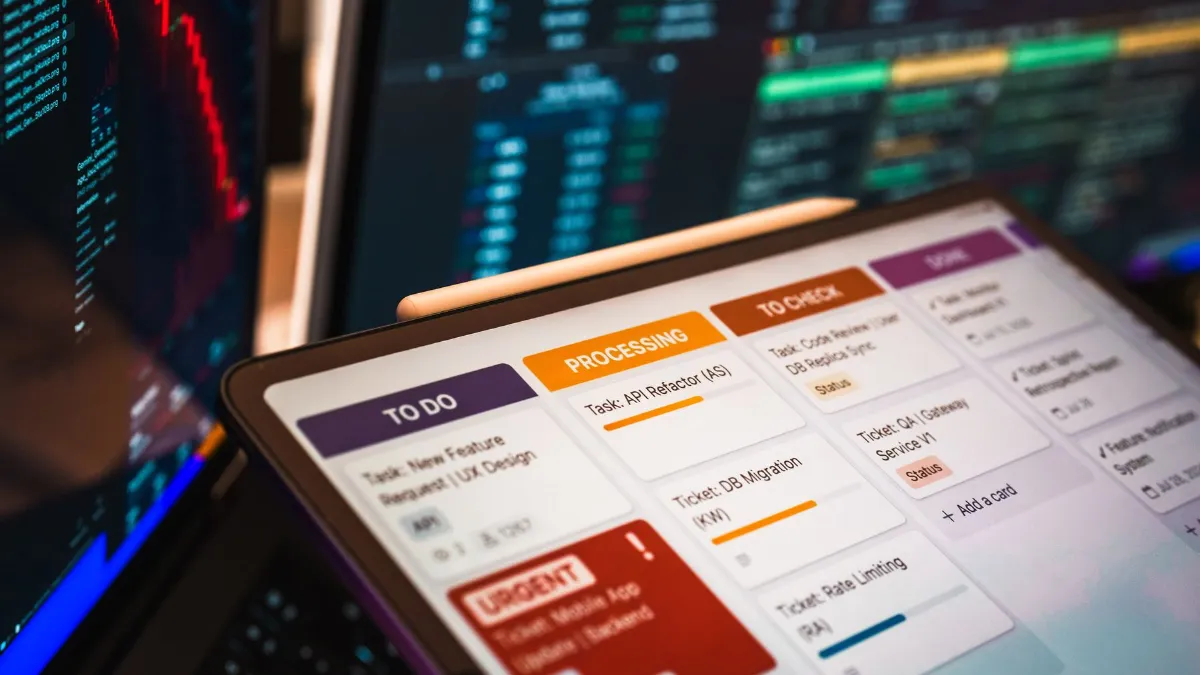
The short answer
- Automate repetitive work: M-Pesa matching, eTIMS invoicing, bookings, stock, approvals and reports.
- Start with one process that wastes the most time.
- Use off-the-shelf tools if they fit; build custom when your process or integrations are specific.
- Our custom web application packages start from KES 200,000.
Many Kenyan businesses still run on spreadsheets, paper forms, WhatsApp groups and manual M-Pesa checks. It works, until the business grows and staff spend hours copying data, chasing approvals and fixing mistakes. A custom web system can automate much of that. Here’s what can be automated, how to start, and what it costs.
What can be automated
| Process | Manual today | Automated |
|---|---|---|
| Payments | Checking M-Pesa messages against orders | Payments matched to orders automatically via M-Pesa APIs |
| Invoicing | Typing invoices and uploading to KRA | Invoices generated and sent to eTIMS from your system |
| Bookings | Phone calls and a diary | Online booking with SMS or email reminders |
| Enquiries | Forms emailed to one person | Leads logged, assigned and followed up in a CRM |
| Stock | Spreadsheet counts | Stock updated with every sale, with low-stock alerts |
| Approvals | Paper forms and signatures | Online requests with approval steps and audit trail |
| Reports | Compiled by hand at month end | Live dashboards |
Benefits
- Hours saved every week on repetitive tasks.
- Fewer errors and lost records.
- Faster service for customers.
- Real-time visibility for managers.
- Easier compliance and audits.
How to start
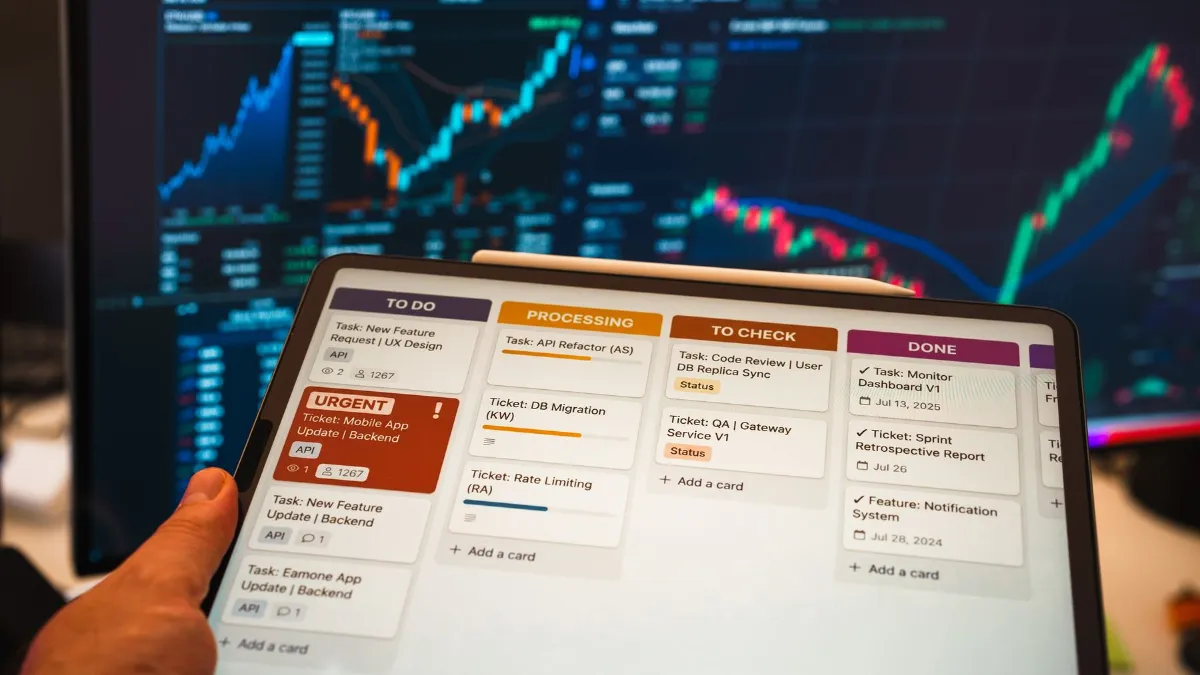
- Map the process: write down each step, who does it, and where time is lost.
- Pick one process with clear pain and a clear payoff.
- Check existing tools: sometimes an off-the-shelf system plus integrations is enough.
- Build a first version with the core features, then improve based on use.
- Train staff and keep the manual process as a backup at first.
Off-the-shelf or custom?
Off-the-shelf software is quicker and cheaper if it fits how you work. Custom systems make sense when your process is specific, you need integrations with M-Pesa, eTIMS or other systems, or subscription costs add up across many users. See custom web development in Kenya and API integration.
What it costs
Our custom web application packages start from KES 200,000 (3–5 core features, admin panel, database, one month of support) and KES 800,000 for complex workflows with 8–12 features and API integrations such as payments, SMS and location.
Remember data protection
Systems that store customer or staff data must follow the Data Protection Act: limit access, secure the data, and explain how it’s used (see legal pages).
Frequently asked questions
What business processes can be automated?
Payment matching, invoicing, bookings, lead follow-up, stock control, approvals and reporting are common examples.
Is automation only for big companies?
No. Small businesses often gain the most, because staff time is limited.
How much does a custom business system cost in Kenya?
Our packages start from KES 200,000, with complex, integration-heavy systems from KES 800,000.
How long does it take to build?
Simple systems can take a few weeks; complex ones are built in phases.
Sources
Facts checked on 4 November 2026. Prices and rules change; confirm current details with the provider or regulator.
About the author. John Kariuki is the founder of Kenya Website Designers in Nairobi. He builds business websites, online stores with M-Pesa payments and custom web systems, and manages domains and hosting for Kenyan businesses.