
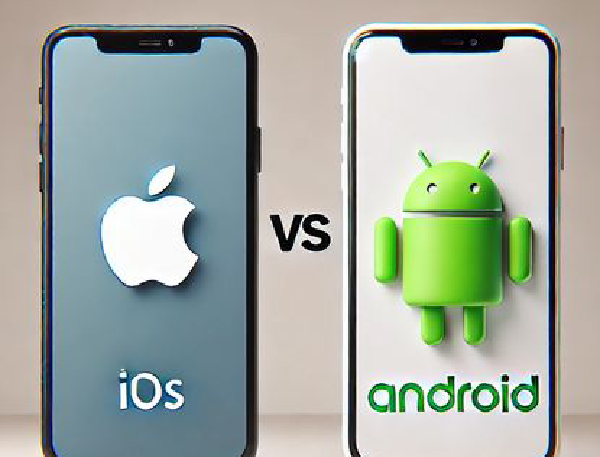
Choosing between Android and iOS app development is an important decision for any business planning to launch a mobile application. The platform you choose can affect your development budget, target audience, features, maintenance requirements and long-term growth.
Table of Contents
ToggleAndroid powers smartphones from many manufacturers, while iOS runs on Apple’s iPhone and other compatible Apple devices. Both platforms offer opportunities for businesses to reach customers, improve engagement and deliver digital services.
Understanding Android vs iOS app development can help you select the platform that best matches your business goals and customer needs.
1. Target audience and market reach
One of the first things to consider is the audience you want your mobile app to reach.
Android supports devices from many manufacturers and across different price ranges. This gives businesses opportunities to reach a broad audience, including users with entry-level and mid-range smartphones.
iOS targets users within Apple’s ecosystem, particularly people using iPhones. Depending on your business model, these users may represent an important customer segment.
For businesses in Kenya, it is useful to understand which devices your existing and potential customers use before deciding which platform to prioritise.
Which should you choose?
Choose Android first if your research shows that most of your target customers use Android devices. Consider iOS if your audience primarily uses iPhones or if your app is intended for customers who rely on Apple’s ecosystem.
If you want to reach both audiences, developing for Android and iOS may be the better long-term option.
2. Development cost and budget
The cost of developing a mobile app depends on its features, complexity, design, integrations and development approach.
Building a native Android app or a native iOS app means creating software specifically for that platform. If you need separate native apps for both platforms, you may need additional development and testing work.
Your budget should account for more than the initial build. Consider ongoing maintenance, bug fixes, security updates, new features and app store requirements.
For example, a simple business information app may require less development work than an ecommerce app with customer accounts, payment processing, order tracking and an administration dashboard.
Which should you choose?
If your budget is limited, starting with one platform may help you launch sooner and test demand before expanding.
Alternatively, cross-platform development can allow a business to support Android and iOS through a shared codebase. This may reduce duplicated development work, although the actual savings depend on the application’s requirements.
3. Development time and technology
Android and iOS use different native development technologies.
Android apps are commonly developed using Kotlin, while native iOS applications are commonly developed using Swift. Each platform has its own development tools, design conventions and testing requirements.
Building separate native applications can require additional time because developers must implement and test features for each platform.
Cross-platform frameworks such as Flutter and React Native offer another option. They allow developers to share much of the application code between Android and iOS.
Which should you choose?
Choose native development when your application requires specialised platform features, detailed device integration or highly platform-specific behaviour.
Consider cross-platform development if you want to launch on both platforms while sharing much of the development work.
The best approach depends on your application requirements, available budget and expected growth.
4. Features, performance and user experience
Both Android and iOS support sophisticated mobile applications, including ecommerce platforms, booking systems, business applications and customer service tools.
However, the devices and operating systems your customers use can influence how your application should be designed and tested.
Android applications need to accommodate a wide range of device specifications and screen sizes. iOS applications need to follow Apple’s interface conventions and work correctly across supported iPhone and iPad devices.
Important considerations include:
App loading speed
Navigation and screen layouts
Security and data protection
Payment integration
Push notifications
Camera and location access
Offline functionality
Accessibility
For businesses in Kenya, features such as M-Pesa integration, efficient data usage and reliable performance on commonly used smartphones may also be important, depending on the app’s purpose.
Which should you choose?
Choose the platform and technology that best support the features your customers need. Test the application on representative devices before launch rather than assuming it will work equally well everywhere.
5. App publishing, maintenance and future growth
Launching an app involves more than completing its development. You must also prepare it for distribution, meet the relevant store requirements and maintain it after release.
Android applications can be distributed through Google Play and, where appropriate, other channels. iOS applications are commonly distributed through Apple’s App Store, subject to Apple’s review and distribution requirements.
Both platforms require ongoing attention as operating systems change, security issues emerge and customer expectations evolve.
You should plan for:
App store submission
Compatibility testing
Bug fixes and software updates
Security improvements
Performance monitoring
Customer feedback
New features as your business grows
Which should you choose?
Consider your long-term plans before selecting a platform. If your business expects to serve customers using both Android and iOS, plan how you will support both as the app grows.
A maintenance plan can help you keep the application functional, secure and compatible with supported devices.
Android vs iOS app development: which is right for your business?
There is no single platform that is best for every business. Your decision should be based on your target audience, budget, required features and plans for future expansion.
Use these questions to guide your choice:
Which devices do your target customers use?
What is your available development budget?
Does your app require specialised device features?
Do you need to launch on both platforms immediately?
How will you manage updates and maintenance?
Does your app need integrations with payment systems or existing business software?
If you are uncertain, begin by defining the problem your app will solve and identifying the people who will use it. These details will help determine the most suitable development approach.
How Kenya Website Designers can help with app development
At Kenya Website Designers, we provide app development services for businesses looking to establish or expand their digital presence.
Before starting development, it is important to define your app’s purpose, target audience, essential features and technical requirements. This helps establish a clear project scope and select an appropriate development approach.
Our broader digital services also include website design, web development, web hosting, website maintenance, web content creation and SEO.
Whether you are planning a business application, customer platform or ecommerce solution, Kenya Website Designers can help you explore the requirements for your project and determine the next steps.

